Artificial Compassion in The Talos Principle 2
Some of the writing in The Talos Principle 2 is genuinely insightful and illustrates how games can actually make the world better

I’ve spent a lot of time recently doing two things: worrying about the future of the world, and playing video games. I mostly play games to distract myself from reality, but everything came together when I played one of my favorite games of 2023, The Talos Principle 2. Like some of the best science fiction, it combines a compelling experience (smartly designed laser-and-box puzzles) with commentary on today’s society and the future of technology. Some of the writing in the game is genuinely insightful and illustrates one way that games can actually make the world better.
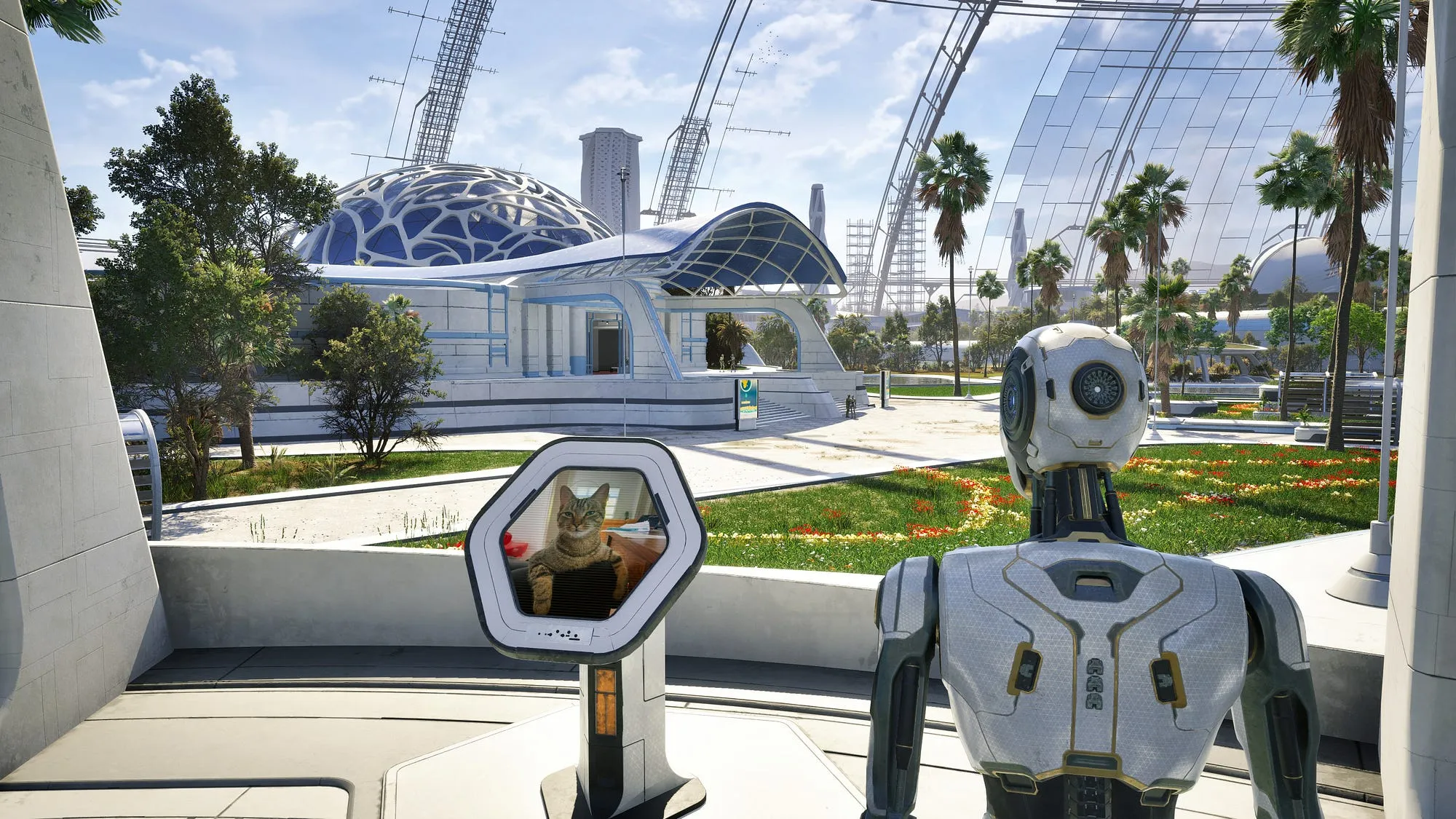
Spoiler Warning: This post discusses the premises of both Talos Principle games as well as specific content from an optional secondary plotline in The Talos Principle 2. You should wait on reading this if you were already planning to play the games, but it shouldn’t spoil the experience as both games focus on puzzle solving and philosophical themes instead of crazy plot twists. Here is a cat picture to buffer against accidental spoilers:
In the first Talos Principle, you play as an artificial intelligence living in a simulated environment (borrowing assets from Serious Sam) who evolves to reach full sentience by solving puzzles and interacting with other artificial personalities on in-game message boards. At the end of the game, you escape the simulation and enter the real world by possessing a physical robot left behind by the extinct biological humans who created the simulation (and an archive of human knowledge and experiences) as a legacy for the future. After the first game, your player character creates a posthuman society by building more robots and imbuing them with unique personalities that evolved inside the simulation.
In The Talos Principle 2 (TTP2), you play as a newly constructed robot who is trying to find their place in posthuman society. The premise of the game assumes that your character is fully human in an intellectual way, which side steps all of the questions about the nature of humanity that have been covered by thousands of creative works over the years. Instead, the writing in the game focuses on questions about the future of posthuman society and the psychology of different characters. The primary plot uses exploration of a massive robotic pyramid to spark a debate over the risks of societal expansion, but I was more interested in the secondary plot that focuses on the psychology and philosophy of morality.
The general philosophy of both games takes quotes from real writers and classical philosophers and mixes them with the writings of fictional authors like Straton of Stageira. Every character in the game has internalized the basic knowledge of a liberal arts degree along with some specialty like engineering. Combining this with virtual internet forums and a detached writing style, the game can feel like taking a Philosophy 101 class along with a basic primer in Cognitive Science. Some people may find this boring, but I loved how the secondary plot uses character dialogue to focus on the importance of moral values and processes (known as Virtue Ethics) compared to the importance of moral rules and responsibilities.
Time To Meet Your Mind
After 30 hours of exploring a beautiful environment, talking to posthumans anxious about the future, and solving complicated laser emitter puzzles, you discover a machine called the Somnodrome that could completely change the structure of society. The robots of TTP2 have the same level of psychological insight that humans do now, which means they understand the physical laws that power their brains but are unable to fully understand the very complicated systems that create thought and behavior. Like biological humans, some of them have become obsessed with finding the true meaning of life and engage in quasi-religious debates with your character. You can use a fairly wide array of dialogue choices to build relationships with these characters before those plot threads reach their climax inside the abstract geography of the Somnodrome:
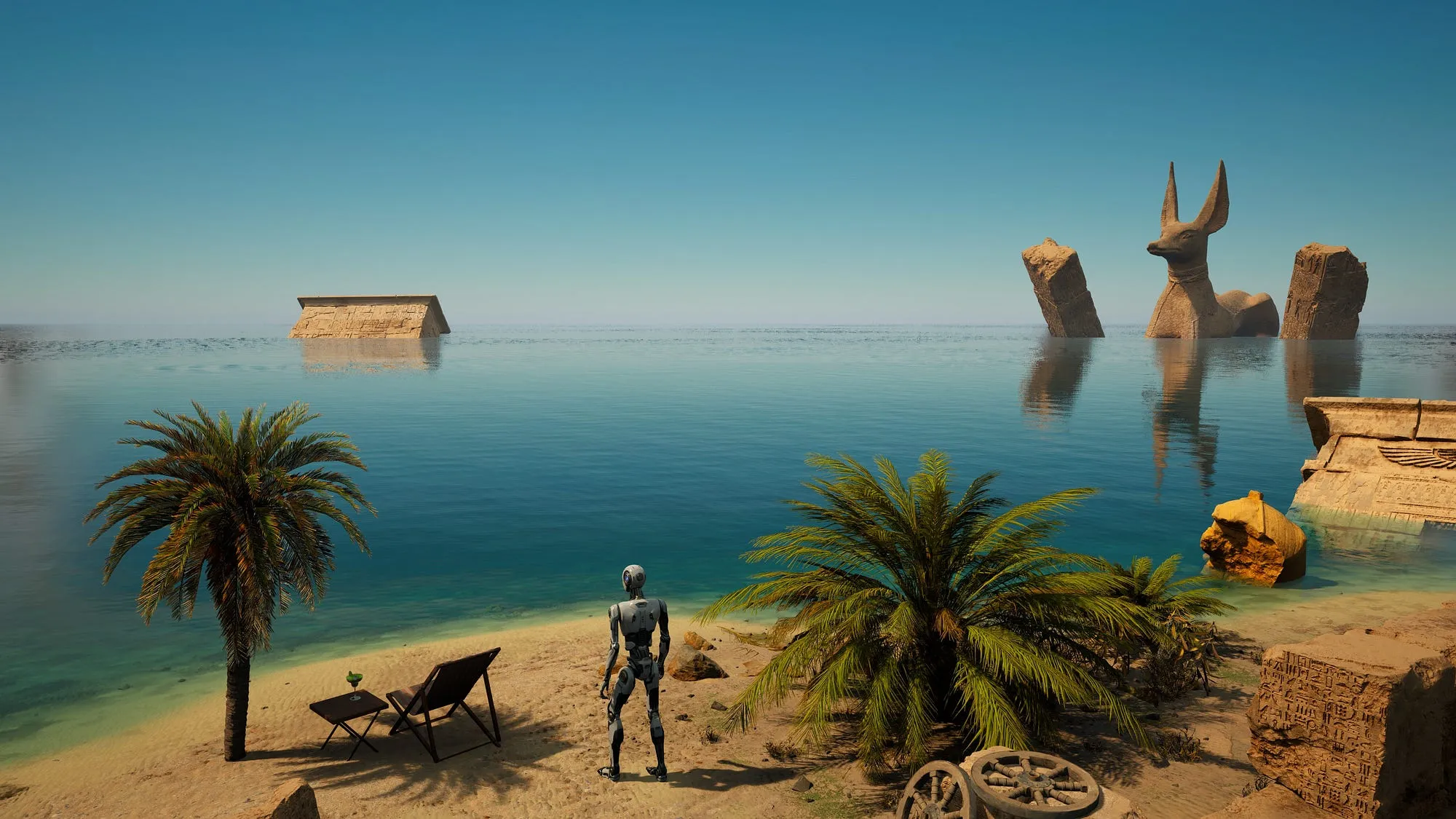
The (unexplained) technology of the Somnodrome lets a robot have a direct conversation with their subconscious mind, and you can decide to try it out and broadcast what happens to everyone else. I recommend doing this because the sequence (specifically credited to Tom Jubert) was my favorite part of the game. After a bit of meta commentary, you have the opportunity to ask an avatar of your subconscious (merging characters from the first game) questions about the meaning of life and the nature of morality. You can play this sequence a few different ways, but here is a transcript of how I experienced the scene with my dialogue choices in bold:
Is there a universal moral law, and if so what is it?
As it turns out there is a foundational moral code built into us. The catch is that while the moral code is simple, the calculations needed to apply it become infinitely complex. Every living creature is a compiler of the moral code. Your compiler can’t give you a ruleset for what’s good, but it can tell you when there are bugs. Your capacity for reason and compassion is your moral compiler. The only rule is to live by it.
How should we know we’re being reasonable and compassionate in the right way?
You want a simple rule, but what I’m telling you is that what is right is the output of sound reason and true compassion. Your intuition will tell you when you’re lacking the compassion. You know the difference between love and hate. And the world will tell you when you’re lacking reason: It has a nasty habit of telling you when you’re wrong.
But how can I know my decision is the right one?
Then let’s tackle the big question. A trolley will collide with someone, but who should it hit? Your compiler is telling you both options are bad so which should you choose? Many moral questions have universally agreeable answers but some stubbornly trend to infinity. So the more you zoom into them the more wild the outcomes become. Is it right to love someone who’s done terrible things? Which of the children should I sacrifice to the trolley god? These aren’t the sort of questions we can solve with a rule. We have to trust the outcome of our moral compilers.
This scene hit me hard because it is the best representation I have seen in a video game of my own views on morality and the meaning of life. It was very surprising to talk to a manifestation of my character’s subconscious and hear words that I might have written myself.
I would describe my moral beliefs as “evolutionary relativism” and they combine the lessons I learned growing up with the scientific knowledge and philosophy I picked up while working on my Masters in Psychology. I believe that human moral values and rules have evolved over time via both biological and cultural evolution. Moral values are neither absolute nor arbitrary, but are approximate representations of the conditions needed for humanity to thrive. Moral rules evolved to explain common interactions between these values. These rules are useful heuristics for dealing with the infinite number of possible situations, but you can and should use reason and compassion to override the rules when necessary.
Values and Compassion
Moral foundations theory provides a useful framework for analyzing the similarities and differences of the moral beliefs held by different cultures, religions, and individuals. Different people care about different moral values, and beliefs about these values come from a combination of cultural transmission and personal experience. Many controversial issues boil down to conflicts over the nature and importance of these values. Researchers disagree about the best ways to categorize morality, but it is clear that some types of human moral beliefs are nearly universal. These shared values helped humans live together long enough to create modern civilization. I would say that some traditional moral values have outlived their usefulness (science has largely supplanted the historical value of purity), but most of these common human values are relevant for determining the future of any human society.
My personal moral values align well with the Declaration of Independence, because I believe that Life (fertility and safety), Liberty (free will with responsibilities), and Happiness (joy and the avoidance of suffering) are the most important. Scientific progress, rational thinking, and empirical data should be used to support all of these values. The role of each value in answering moral questions is extremely situational so our moral reasoning also needs to be situational: Life is most important during times of conflict and existential risk. Freedom is most important during times of confused inaction as it supports the creation of new ideas and inventions. Happiness makes life worth living in the first place and gives us the desire and mental strength needed to keep going when times are tough.
Understanding how these values work is very important, but knowledge alone isn’t enough to make good moral decisions. Most humans can resolve value conflicts at the personal level, but that does not scale up to the level needed to keep families and societies alive. The key ingredient required to solve larger problems is Compassion, which is a feature that only evolves in social organisms. On a biological level compassion and empathy are based on signals coming from mirror neurons that evolved along with facial expressions and body language to help us understand the intentions of other organisms like us. We then evolved the spoken and written languages needed to cooperate at even larger scales.
Compassion is the ability to treat the suffering of others like it was our own and it is supported by anything that creates a feeling of unity with others. At the biological level we are hardwired to care about our families as an extension of our own self, but this basic instinct only encourages compassion towards entities that are similar to us in significant ways. Despite the protests of many it is not monstrous or inhuman to ignore the suffering of strangers, it is the default human experience. This level of compassion was not enough to build cities and nations, so we had to culturally evolve new forms of compassion that include care for wider categories of beings. Over time humans have learned to extend compassion to our tribes, our nations, and to strangers across the globe. This kind of compassion needs to be actively taught to young people, which is why it is a common element in many parenting traditions and media for children.

Morality Should Help People
Returning to The Talos Principle 2, playing the game and reading reactions online has reaffirmed my belief that games can do more to encourage the adoption of helpful systems of morality based on shared moral values and compassion. I believe this is far better than trying to encourage specific moral beliefs, because humans love to use moral superiority as an excuse to murder and abuse each other. Unlike the shared values that evolved independently in many cultures, the specific beliefs of different religions and fundamentalist ideologies are based in specific historical conditions and they can be completely irrelevant or destructive in today’s world.
I am a strong believer in the importance of tolerance and trying to make the world better using iterative improvements to technology and the structure of society. This is not the same as advocating for centrism and political civility (like Andrew Yang’s vanity projects) or a reactionary rejection of all cultural evolution over the last 50 years. Progressive social movements have real value and we should focus on the helpful aspects (like the increased scope of human rights) while trying to minimize the more socially destructive ideas (like the ideological purity obsessions of many on the left) that fundamentalist movements always seem to embrace.
However, it is hard to advocate for compassion and boringly positive moral values because modern culture in America is very biased against tolerance and moderation. This has always been hard due to our natural bias against complexity, but social media has only made this worse by incentivizing simple and strong statements of belief. On one side we have the brazenly amoral agents of fundamentalist Capitalism who truly believe that money is the only important value in life. On the other side we have the agents of fundamentalist anti-Capitalist ideologies based around beliefs that make no sense in today’s world. Sniping everyone from the shadows of the internet are the fundamentalist cynics who believe all attempts to incrementally improve society are pointless and doomed to fail.
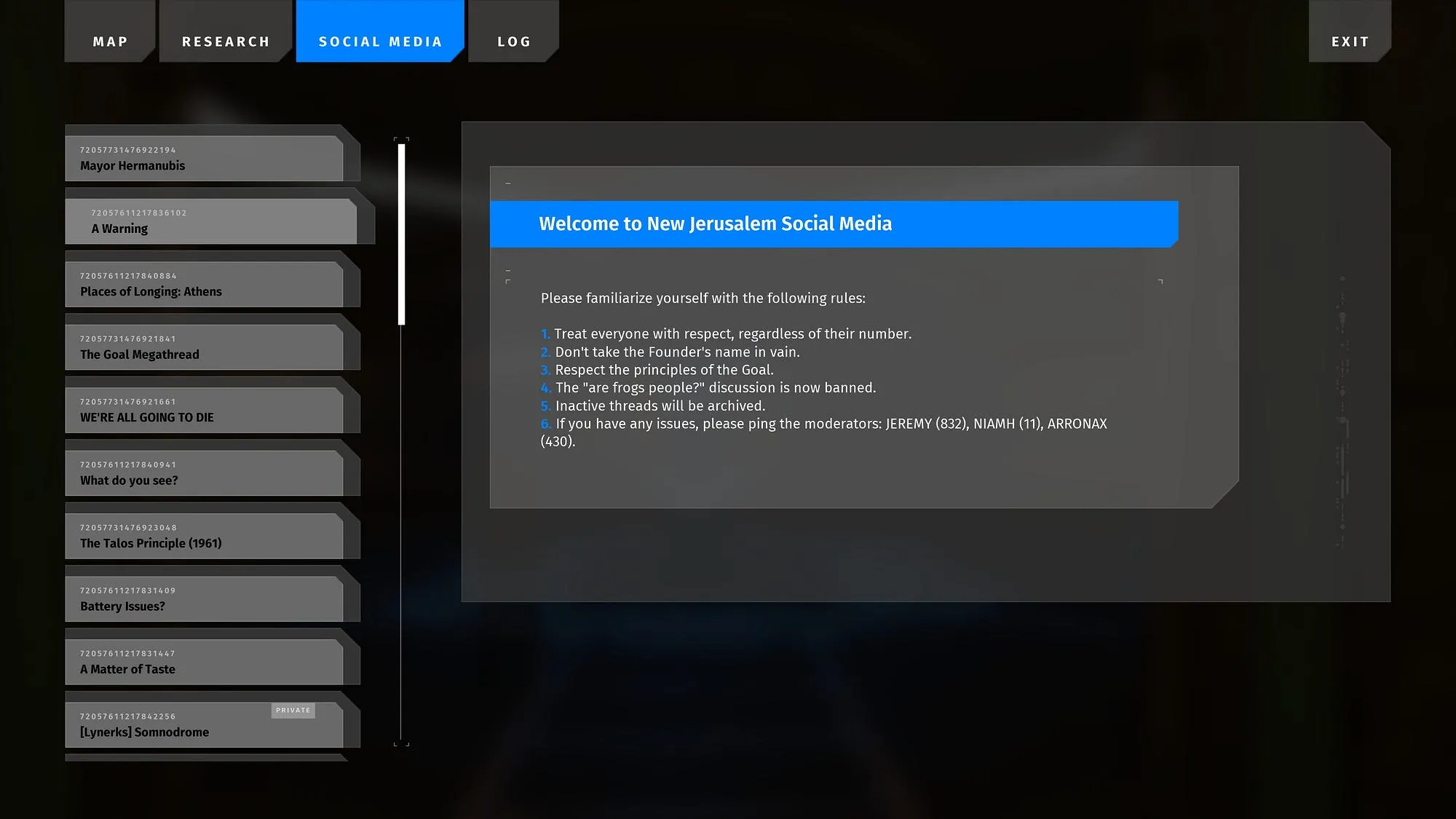
Reading the quotes above, I think the metaphor of the moral compiler can be a useful tool for fighting the ravages of capitalists, cults, and cynics. It is possible to improve our moral compiler by learning more about the world around us and training it in scenarios that echo real life. We cannot train moral competency with trolley problems because they operate inside the abstract and unrealistic conditions that fuel endless online debates. The goal of moral debates is to decide who has the superior beliefs, and that does not actually help anyone. Instead, I believe we should focus on improving our moral compilers so we can get better at helping each other. Real life moral choices are rarely binary or perfectly balanced, and we need to learn how to minimize the negative impacts of hard choices.
Due to their interactive nature games have a unique opportunity to encourage detailed moral decision making, but we have only scratched the surface. Many games with moral choices only model a laughably simple axis of good/evil or paragon/renegade that incentivizes moral min-maxing and extremism. Other games take the cynical approach of providing meaningless moral choices that are completely subverted by the demands of the plot. Only slightly better are the games with multiple endings that let players choose the entire fate of a fictional universe by flipping a switch.
The best way for games to engage with moral choices is to place the player in situations relevant to real life moral dilemmas and allow them to use their understanding of the situation and their compassion towards characters as inputs into their moral compiler. This is hard for the main plot of a game as some players will always be upset that they missed content or didn’t like how things ended up, but it works well for lower intensity choices like the conversations in The Talos Principle 2. Combining these choices with the unique personalities of the characters and great voice acting, players are encouraged to engage with questions relevant in the real world and practice using their moral compiler. It’s hard to prove, but I strongly believe that anything which helps people make better moral decisions will also help make the world a better place.